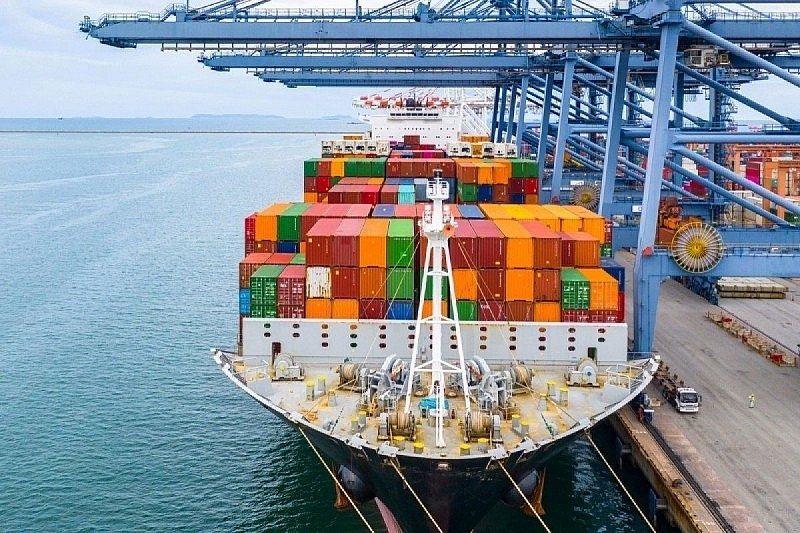



Vice Chairman of the Hanoi People’s Committee, Nguyen Manh Quyen, recently ratified Plan No. 104, dated March 13, 2026, outlining the development strategy for logistics services within the capital for the 2026-2030 period.
Under this mandate, Hanoi’s overarching objective is to cultivate a sustainable, efficient, and high-value-added logistics sector characterized by robust competitiveness. This initiative seeks to leverage the city’s strategic advantages within global supply and value chains.
Furthermore, the plan envisions transforming Hanoi into the primary logistics gateway for the Red River Delta and a premier e-logistics hub in Vietnam. The strategy prioritizes the advancement of “green and smart” logistics to reduce operational costs, bolster corporate competitiveness, and provide comprehensive support for the burgeoning e-commerce sector.
Regarding specific economic indicators, by 2030, the logistics sector is projected to contribute 10%-12% to the city’s GRDP, with a service growth rate of 18%-22%. The rate of logistics outsourcing is targeted at 65%-70%, while logistics costs are expected to be optimized to an equivalent of 13%-16% of the municipal GRDP.
In tandem with these growth objectives, Hanoi is directing the synchronized development of its logistics infrastructure. Specifically, at least one regional-level logistics center (Class 1) will be established, strategically integrated with Noi Bai International Airport or the northern gateway area (Dong Anh, Soc Son).
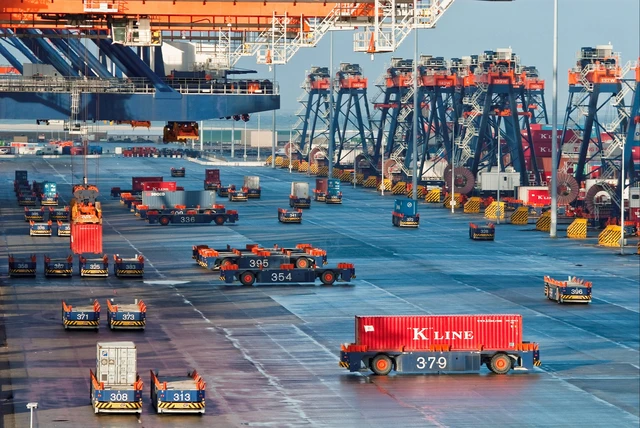
Hanoi aspires to become the foremost e-logistics hub in Vietnam.
Additionally, two city-level logistics centers (Class 2) will be developed in the Phu Xuyen (southern gateway) and Gia Lam/Long Bien (eastern gateway) areas. These will be complemented by a network of Inland Container Depots (ICDs), including ICD Co Bi, ICD Dong Anh, and ICD Duc Thượng. Concurrently, regional allocations will guide the expansion of modern warehousing, cold storage, and smart warehouse systems.
Notably, Hanoi aims to accelerate the integration of digital technologies in logistics operations. By deploying IoT, Big Data, and Blockchain, the city intends to automate and digitize logistics processes (Logistics 4.0 and e-logistics), thereby encouraging service providers to offer high-level supply chain solutions such as 3PL, 4PL, and eventually 5PL.
Moreover, the city will research the development of sophisticated e-commerce fulfillment centers to facilitate both domestic and Cross-Border E-commerce (CBEC).
Aligned with the Green Logistics orientation, the municipality will encourage the transition of logistics centers, ICDs, and warehouses toward renewable energy sources to reduce carbon footprints, steering the city toward the Net Zero emissions target.
In terms of human capital, Hanoi targets 100% of major logistics enterprises to have personnel trained under international standards, such as FIATA and CSCMP. The city also seeks to progressively increase the volume and proportion of high-skilled labor within the industry.
Furthermore, a comprehensive Hanoi Logistics Data Platform will be developed to integrate data from warehouses, transportation, ICDs, and enterprises. At the grassroots level, 100% of communes and wards will implement data updates on logistics facilities and businesses, aligned with the two-tier government model.
To actualize these targets, Hanoi has proposed several key solutions. These include reviewing and adjusting urban planning and sector-specific zoning to ensure deep integration of logistics services within the broader industrial structure and infrastructure.
The city will also utilize digital platforms to enhance the oversight and supervision of warehousing, transportation, and ICD operations. Information technology will be prioritized in administrative management to streamline procedures across the sectors of industry, trade, customs, taxation, and transport.
Additionally, Hanoi will continue researching the construction of logistics hubs along the city’s ring roads, connecting consolidation points and distribution centers in concentrated industrial areas. Emphasis will be placed on specialized warehousing for agricultural products and high-tech manufacturing.
Concurrently, the city plans to develop Intelligent Transport Systems (ITS), transform logistics infrastructure, and build connectivity platforms linking cargo owners, shippers, and customers.
Finally, logistics enterprises will receive support to adopt digital platforms and participate in awareness programs promoting the use of outsourced services (3PL, 4PL, 5PL). To address labor requirements, the city will foster alliances between universities, vocational training centers, and international organizations to form a training network compliant with FIATA and CSCMP standards, while strengthening regional linkages within the Capital Region and the Northern Key Economic Zone.
Source: https://www.nguoiduatin.vn/ha-noi-huong-toi-tro-thanh-trung-tam-e-logistics-hang-dau-viet-nam-204260313230110004.htm