



According to VNA correspondents in Europe, escalating tensions in the Middle East are exerting extensive spillover effects on the global transportation industry. From aviation to logistics, these developments are compelling enterprises to undergo rapid adaptation while potentially reconfiguring the competitive landscape across multiple sectors.
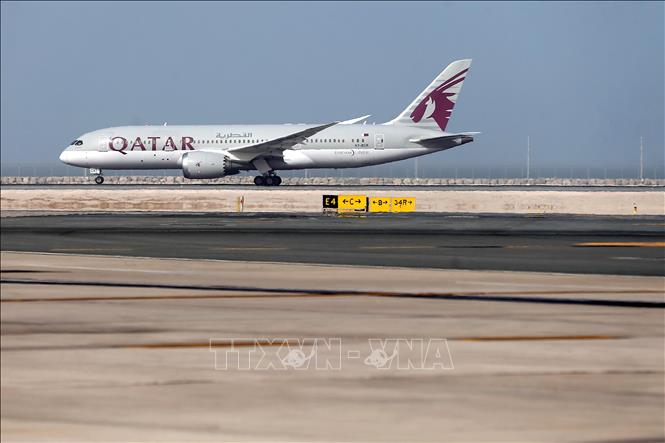
A Qatar Airways aircraft. Reference photo: AFP/VNA.
The Middle East-a preeminent global passenger transit hub-is currently facing severe disruptions within the aviation sector. Major Gulf carriers, including Emirates, Etihad Airways, and Qatar Airways, have long served as vital conduits connecting flight paths across Europe, Asia, and Africa. However, the intensification of conflicts involving the U.S., Israel, and Iran has destabilized operations, leaving tens of thousands of passengers stranded in recent weeks.
On March 16, Emirates was forced to cancel and reroute several flights following a drone strike on Dubai International Airport (UAE). Analysts suggest these impacts may persist even after the cessation of hostilities, particularly concerning the tourism segment, which traditionally recovers more sluggishly than transit traffic.
Beyond Gulf-based carriers, numerous international airlines are facing immense pressure to adjust their flight paths. European carriers, already circumventing Russian airspace since 2022, must now further avoid the Middle East, leading to prolonged flight durations and surging fuel expenditures.
Cost pressures have intensified as energy prices escalate. Crude oil is currently hovering around $100 per barrel, while jet fuel prices have more than doubled since the outbreak of the conflict, reaching approximately $190 per barrel. This is partially attributed to the fact that nearly 20% of the global aviation fuel supply transits through the Strait of Hormuz—a region currently experiencing significant disruption.
Escalating costs have compelled many airlines to curtail their flight frequencies. Conversely, certain Western carriers are seizing this opportunity to expand their market share. British Airways (UK) has increased its flight capacity to Singapore and Bangkok (Thailand), while Lufthansa (Germany) recorded a 60% surge in bookings during March.
In parallel with aviation, the global logistics industry is undergoing a profound restructuring to navigate disruptions along strategic transit routes. The French shipping conglomerate CMA CGM has deployed new overland transport corridors to bypass the Strait of Hormuz.
Under this contingency, cargo from Asia is transported to the Port of Jeddah (Saudi Arabia) on the Red Sea, subsequently transshipped by road to Dammam in the East before distribution to Gulf nations such as Kuwait, Bahrain, Qatar, and the UAE. Furthermore, the firm has diverted vessels to ports situated south of the Strait of Hormuz, including Khor Fakkan and Fujairah (UAE), as well as the Port of Sohar in Oman. From these points, goods continue via road through newly established logistics corridors.
Other alternative routes are being prepared, including transport from Jordan’s Port of Aqaba to Iraq, or utilizing overland routes from the Port of Mersin in Turkey.
These adjustments underscore the direct impact of the Middle East conflict on global supply chains and reflect a broader shift toward more agile transport models aimed at mitigating geopolitical risks.
Experts contend that while transport demand may temporarily decline due to high costs and decelerating economic growth, the market typically rebounds swiftly following such shocks. Nevertheless, in the current climate, the volatility in the Middle East may serve as a catalyst for a profound reconfiguration cycle within the global aviation and maritime industries.